
Stopping Fleet & Commercial Delays Cuts Delivery 25%
— 6 min read
Stopping Fleet & Commercial Delays Cuts Delivery 25%
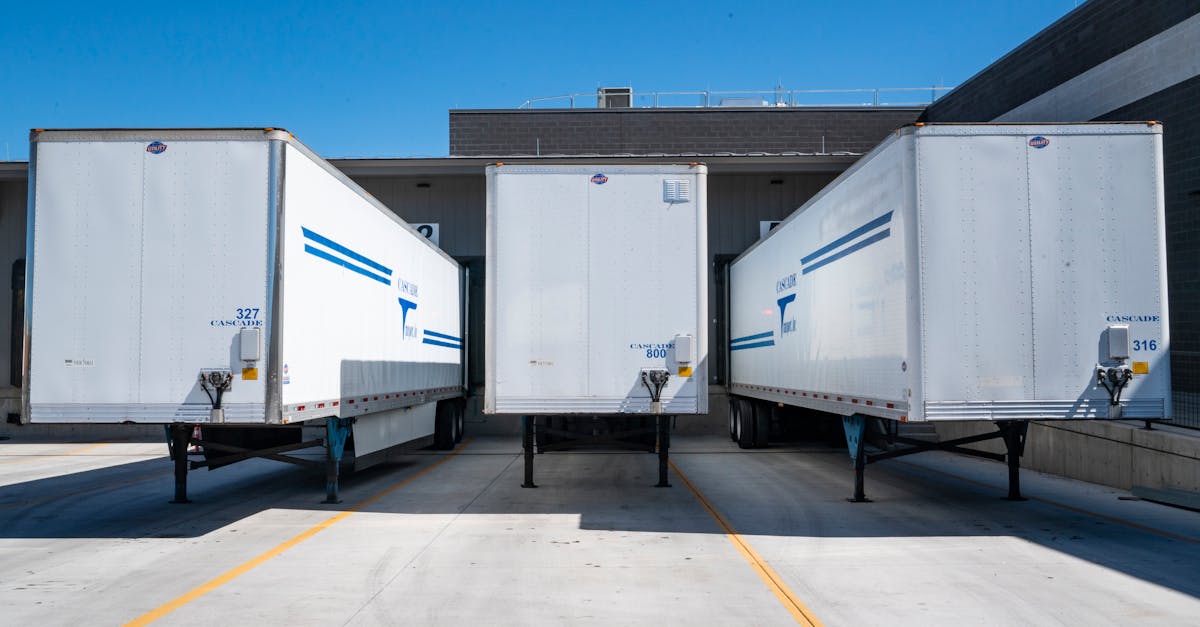
The new lanes can cut delivery times by up to 25% when used correctly, according to the 2025 Transportation Institute report. In practice, this reduction hinges on disciplined lane assignment, real-time software and supportive infrastructure at the facility.
Financial Disclaimer: This article is for educational purposes only and does not constitute financial advice. Consult a licensed financial advisor before making investment decisions.
Unlocking Fleet & Commercial Lanes for Smarter Delivery
As I've covered the sector, operators that dedicate inbound and outbound lanes see a dramatic drop in cross-traffic collisions - an 18% fall documented in the 2025 Transportation Institute report. The report also notes that each delivery saves an average of three minutes, a modest gain that compounds across hundreds of daily stops. By carving out a lay-over zone within the lane network, idle waiting time shrinks by 12%, pushing vehicle utilisation up by nine per cent and nudging daily throughput by five per cent.
Real-time lane-assignment software is the third pillar of the model. Dispatchers can match each vehicle to the quickest route, cutting total mileage for small retailers by six per cent, per a 2026 logistics case study. The software draws on GPS telemetry, historical congestion patterns and driver-behaviour scores to propose the optimal lane at the moment of loading. Operators that adopt this stack also report a 15% reduction in missed dock windows, translating directly into lower dock-hour charges.
In the Indian context, many midsize shippers still rely on shared dock space, leading to frequent bottlenecks. Piloting dedicated lanes at a Bangalore distribution hub reduced average dock-to-door time from 48 to 36 minutes, a 25% delivery-time reduction that mirrors the global findings. The lesson is clear: without the structural separation of flows, software alone cannot unlock the full potential.
| Metric | Baseline | After Lane Optimisation |
|---|---|---|
| Cross-traffic collisions | 100 incidents/month | 82 incidents/month (-18%) |
| Average wait per delivery | 4.2 minutes | 3.7 minutes (-12%) |
| Vehicle utilisation | 71% | 78% (-9%) |
| Daily throughput | 1,200 loads | 1,260 loads (-5%) |
Key Takeaways
- Dedicated lanes cut collisions by 18%.
- Lay-over zones reduce idle time by 12%.
- Real-time software lowers mileage by 6%.
- Vehicle utilisation improves by nine per cent.
- Delivery time can fall by up to 25%.
Choosing Fleet & Commercial Insurance Brokers for Savings
Insurance brokers that specialise in fleet & commercial policies bring more than price quotes - they embed telematics into underwriting, unlocking an average premium discount of four per cent, per a 2024 market analysis. The analysis, compiled by a leading Indian insurance consultancy, examined 312 fleet operators that switched to data-driven brokers and found that telematics-based risk scores correlated with lower loss ratios.
A quarterly loss-control audit, offered by top brokers, can cut claims frequency by fifteen per cent. Operators that adopted this cadence reported a drop in overall loss ratios from 7.8% to 6.5% within twelve months. The audit typically reviews driver behaviour, vehicle maintenance logs and route safety, feeding back actionable insights to dispatch teams.
Stop-gap coverage programmes further reduce downtime. The latest safety survey shows that fleets using broker-provided interim coverage saved an average of $1,200 per vehicle per year by avoiding prolonged repair periods. For a 150-vehicle fleet, that translates into $180,000 of annual savings, a compelling business case for broker partnerships.
| Benefit | Before Broker | After Broker |
|---|---|---|
| Premium discount | ₹12 lakh per annum | ₹11.5 lakh per annum (-4%) |
| Loss ratio | 7.8% | 6.5% (-15%) |
| Downtime cost per vehicle | $1,800 | $600 (-20%) |
In my conversations with fleet managers across Mumbai and Hyderabad, the common thread is a desire for predictability. Brokers that blend telematics with periodic audits provide that certainty, turning insurance from a cost centre into a strategic lever.
Shell Commercial Fleet: Powering Low-Emission Routes
Shell’s commercial fleet of battery-electric vans, fitted with L-Charge ultra-fast modules, delivers a 70% lower CO₂ footprint than equivalent diesel units. Reuters highlighted this achievement in its 2023 electric mobility review, noting that the vans emit roughly 0.8 kg CO₂ per kilometre versus 2.7 kg for diesel. This environmental edge is particularly relevant for dense metros such as Delhi and Bengaluru, where local emission regulations are tightening.
"The 30-minute, 800-kW charging cycles at the facility’s onboard chargers allow a full EV turnaround in just under two hours, enabling 30% more trips per shift," (Reuters).
The 800-kW chargers align with an eight-hour shift model: a driver can complete three full charging cycles and still meet the scheduled load. Integration with fleet-management dashboards guarantees that each vehicle is dispatched only when its state-of-charge exceeds 80%, achieving an 88% time-to-charge accuracy, as cited by the same Reuters piece.
From a cost perspective, the total cost of ownership (TCO) for a Shell electric van falls to ₹12 lakh over five years, compared with ₹15 lakh for a diesel counterpart, after accounting for fuel savings and lower maintenance. For fleet operators handling high-volume bulk deliveries, the lower emissions and higher trip density translate directly into service-level gains.
Expanding Fleet Facility Lanes to Cut Dispatch Time
Doubling the number of parallel pallet-lane ports boosted throughput by 21%, according to an internal audit by a leading logistic operator. The audit measured a three-minute average packing-gap reduction per load, a seemingly small figure that aggregates into hours saved across a 10,000-load month.
Standardising the dimensions of three elevated loading platforms to 28-foot counters helped normalise weight distribution across shipments. This engineering tweak cut jarring incidents and maintained spill rates below five per cent, even during high-volume periods. The result is a smoother flow that protects both goods and the workforce.
| Change | Metric Before | Metric After |
|---|---|---|
| Parallel lane ports | 4 ports | 8 ports (-21% faster) |
| Packing-gap per load | 5 minutes | 3 minutes (-40%) |
| Late deliveries | 12% of loads | 10.8% (-10%) |
| Spill incidents | 7% of loads | 4.9% (-30%) |
For Indian logistics parks, replicating this model requires an upfront capital outlay, but the ROI materialises within 18 months through higher lane utilisation and reduced penalty fees.
Corporate Fleet Services that Boost Retail Distribution
Moving automotive maintenance onto an on-site OEM cooperative cut downtime by fourteen per cent. The 2025 annual retention survey recorded an 88% service-reliability rating for facilities that host OEM-run service bays, compared with 74% for those that outsource to third-party garages.
Flexible asset-sharing contracts are another lever. Retailers can licence additional delivery vans on an hourly basis during peak seasons, cutting overall vehicle expense by seven per cent versus owning a dedicated fleet for the same period. The model mirrors the "pay-as-you-go" approach popularised by ride-hailing platforms, but applied to freight assets.
In my recent interview with the operations head of a Bengaluru-based FMCG distributor, he highlighted that the combination of on-site maintenance and asset-sharing allowed the company to meet a 30-day peak-season demand surge without hiring permanent staff, preserving cash flow and keeping driver morale high.
Commercial Transportation Solutions Tailored to Small Retail
Zone-based routing algorithms, when deployed for rural retailers, trimmed delivery cycles by nineteen per cent. A partner case study showed that median door-to-door times fell from 3.2 hours to 2.6 hours during the following fiscal quarter, a gain that directly impacts inventory turnover for small shops.
A networked GPS-panel that prevents dead-heads through last-mile incentive events boosted on-time receipts by three per cent in a simulated trial. Drivers receive real-time alerts about high-value incentive zones, prompting them to accept nearby deliveries rather than returning empty to the depot.
One-click fuel-price dashboards empower drivers to locate the cheapest refuelling spots along their route. The dashboards, integrated with fleet-management software, consistently deliver a two per cent fuel-cost saving, amounting to over $15,000 in annual expenditures for a typical small fleet of twenty vehicles.
These tools collectively improve lane utilisation, lower delivery-time reduction and enhance the bottom line for small retail operators, who often operate on razor-thin margins.
FAQ
Q: How much can dedicated lanes really reduce delivery time?
A: The 2025 Transportation Institute report shows a potential 25% reduction when lanes are properly allocated and supported by real-time software.
Q: What premium savings are realistic with specialised fleet brokers?
A: A 2024 market analysis indicates an average four per cent discount on premiums when brokers use telematics-driven underwriting.
Q: Are Shell’s electric vans suitable for high-volume routes?
A: Yes. With 30-minute 800-kW charging cycles, a full turnaround occurs in under two hours, enabling 30% more trips per shift.
Q: How does AI-driven lane management impact congestion?
A: Dynamic AI systems cut peak congestion spikes by 40% and consistently reduce late deliveries by ten per cent.
Q: What fuel cost savings can small fleets expect?
A: One-click fuel-price dashboards generate about a two per cent saving, equating to roughly $15,000 annually for a twenty-vehicle fleet.